

When we use the word ‘transformation’, we’re often speaking about a future time when we’ve achieved the goals we previously set, which, in turn, ushers us into a life we’ve only imagined or once had.
Some people think transformation will come, while others think it is within their power (harnessing tangible and intangible resources) to build it. In either case, personal beliefs are consequential because everything in the universe is a manifestation of some belief.
The beliefs we hold about ourselves, others, what matters, and what’s beyond us form the frame behind everything we are or become. That’s why your worldview matters (a topic for another day).
For now, let’s address some questions about the future, and no, it’s not about AI. The whole world is concerned about it and rightly so, but just like money, AI isn’t everything.
What do you believe about your potential, risk, failure, or destiny, because the beliefs you negotiate today will determine the story you tell tomorrow.
1. Should I only pursue what I’m passionate about?
What you believe about the relationship between your passion and your ability to provide will determine whether you build a business, career or just collect expensive hobbies.
Chris Rock says, “Follow your dreams if they’re hiring.”
Steve Jobs is a pioneer for those who believe in following their passions. Watch his famous speech again, and you’ll see just how unique his life was.
It’s fair to say that only passionate people change the world. Except that not everyone will be an inventor or lead the movement for new cultures, as Steve Jobs did.
I will not bore you with statistics about startup failure rates or Hollywood dreamers who never made it. But believe me, if you’re inclined towards a stable life, passion is a terrible counsellor. If you follow it and are unsuccessful later, someday your rent will be due, and you’ll hate that you’ve been thinking about some lofty idea and not your survival or convenience.

Chris Rock grew up watching his parents work gruelling jobs to keep the lights on. His father was a truck driver and a newspaper deliveryman who worked two jobs, but today he’s one of the most accomplished comedians in the world. Comedy isn’t even a stable business, but one of those ‘passion careers’ with its share of danger (yeah, that Oscars slap), so despite experiencing hardship in childhood, he chose the field anyway.
It makes sense to think twice about following your passion, especially since Chris Rock, who’s asking you to do so, has seen both sides of the career coin. It also makes sense because the marketplace doesn't care about your passion, but about the problem you solve (more about this in a bit).
Just know that if there’s no demand for what you love doing, you’re left with a hobby with serious overhead.
2. What actually determines whether I’ll finish what I start?
Everybody grapples with this one, and far too many of us do that naturally by trying to escape it.
I propose you answer this question instead: Do you believe you can handle the pain long enough until you succeed?
Alex Hormozi says, “Every goal worth pursuing has so much pain between where you are and where you want to go that saying you only want to do the thing you’re passionate about is a weak excuse. Interests get you started, proficiency keeps you going, but pain tolerance helps you finish.”
One might think that, since Hormozi has built his fortune owning gyms, he’s referring to physical pain. No. This means there’s a predictable pattern in achievement: everyone starts excited, most people quit when competence plateaus, and only those who can endure boredom and discomfort cross the finish line.
Sometimes, things don’t go as planned, so expanding our capacity to stay in the game when every impulse wants to quit is equally as important as any other skill necessary for success.
3. What’s the real cost of playing it safe?
James Dumoulin puts it simply: “Take the risk or lose the chance.”
Every moment we spend protecting ourselves from failure is a moment we’re trading away from possibility. Risk and regret are both forms of pain, but only risk carries possibility. Risk is futuristic; if it turns out well, you win, if not, you lose or learn, but at least you face a future possibility head-on. Regret, on the other hand, is centred on the past; you look back on your life and see things you wished you had done differently.
If that sounds a little too serious, know that we don’t necessarily face life-altering risks or regret every day, but at transitional moments in our lives, entering adulthood, birthing a child, going to college, getting married and so on. The choice is almost always ours to make, albeit there may be pressures and influences.
Ultimately, what you believe about risk will determine what opportunities you even allow yourself to see.
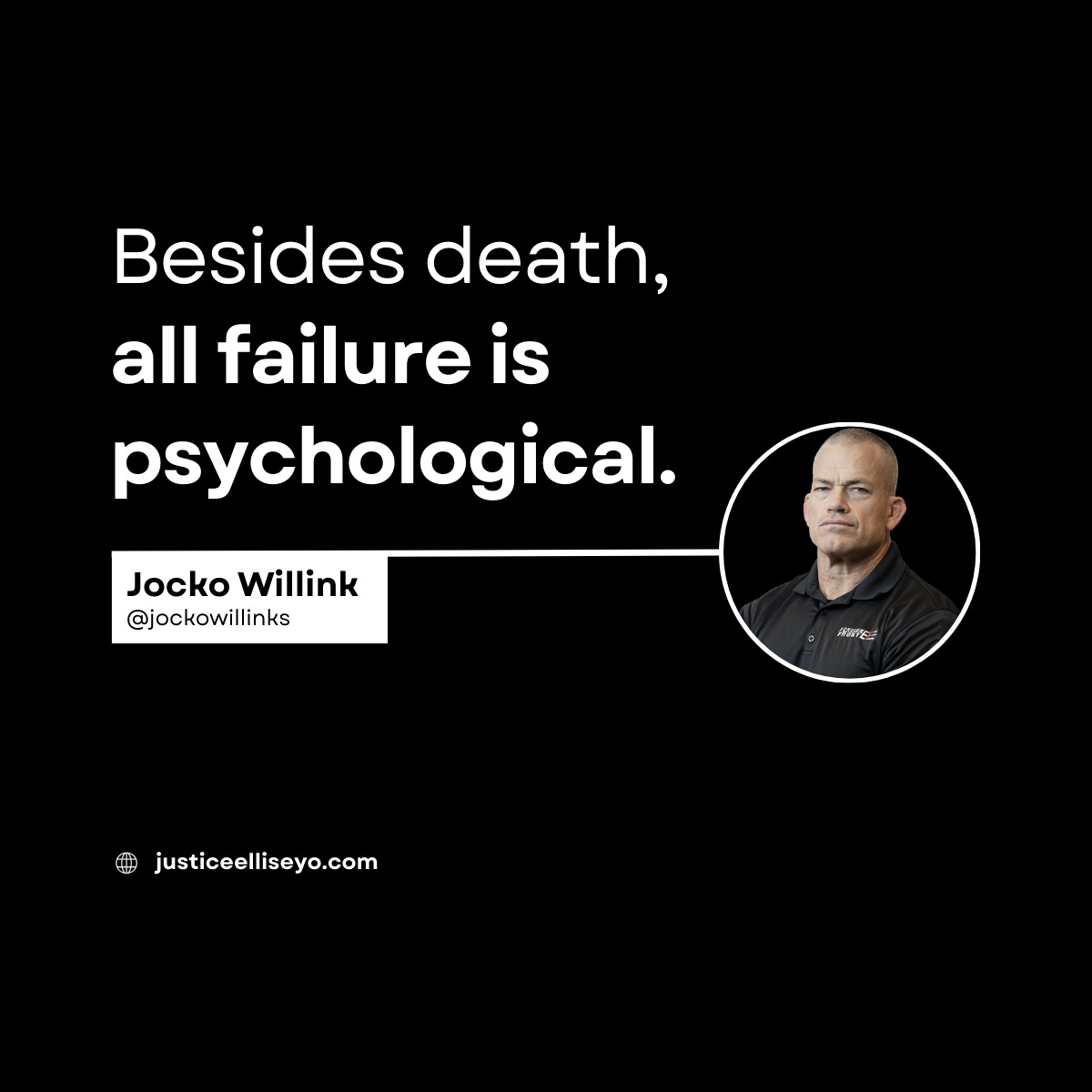
4. When have I actually failed beyond recovery?
“Besides death, all failure is psychological.” - Jocko Willink
Willink spent decades in the SEALs learning that the only unrecoverable failure is the one you accept as permanent. To be fair, men like Willink spent years training to be both mentally and physically strong, while most of us dread ever having to endure anything like such training.
That said, the fact remains that everything else, bankruptcy, rejection, humiliation, defeat, is just data if you choose to use it that way. They are all impermanent unless we make them otherwise. In fact, all things, including fortune and success, are impermanent. There once was a Vanderbilt, Tesla, Jobs, Newton, Maradona, Einstein, name them all. We live, and we die; we just do both differently, and these two are the only certainties in the human experience.
I am learning that the story I tell myself about my past matters infinitely more than what actually happened. What we believe about our failures is a hallmark of our lives.
5. How do I actually grow when I’m already overwhelmed?
Here’s something practical from Tony Robbins: “Take 15 minutes out of your day and decide you’re going to go for microlearning. Decide you’re going to learn what matters, something pragmatic, something valuable.”
It’s easy to think that transformation means assuming a new life and getting rid of the old one, like burning down a pile of utterly useless rubbish. But if we’re being practical, it has a lot to do with the things we’re learning every day. And you don’t acquire a massive amount of impactful information in one day; if our brains were wired that way, everyone would have IQ scores above 200, and college degrees would take months, not years.
Learning little important things every day is how we become proficient. As for telling ourselves we’re too busy, well, you’re not too busy to become who you need to be.
It could be 15 minutes or 1 hour in an online class, do it!
6. What does it take to build something that actually matters?
According to Sam Corcos, “If you want to build an average company, you can just do average things. But if you want to build an extraordinary company, you have to try new things.”
Corcos co-founded Levels, a health tech company challenging how we think about metabolic health, by doing what many people thought unnecessary, making continuous glucose monitoring accessible to everyday people, not just people with diabetes. How’s that for thinking outside the box?
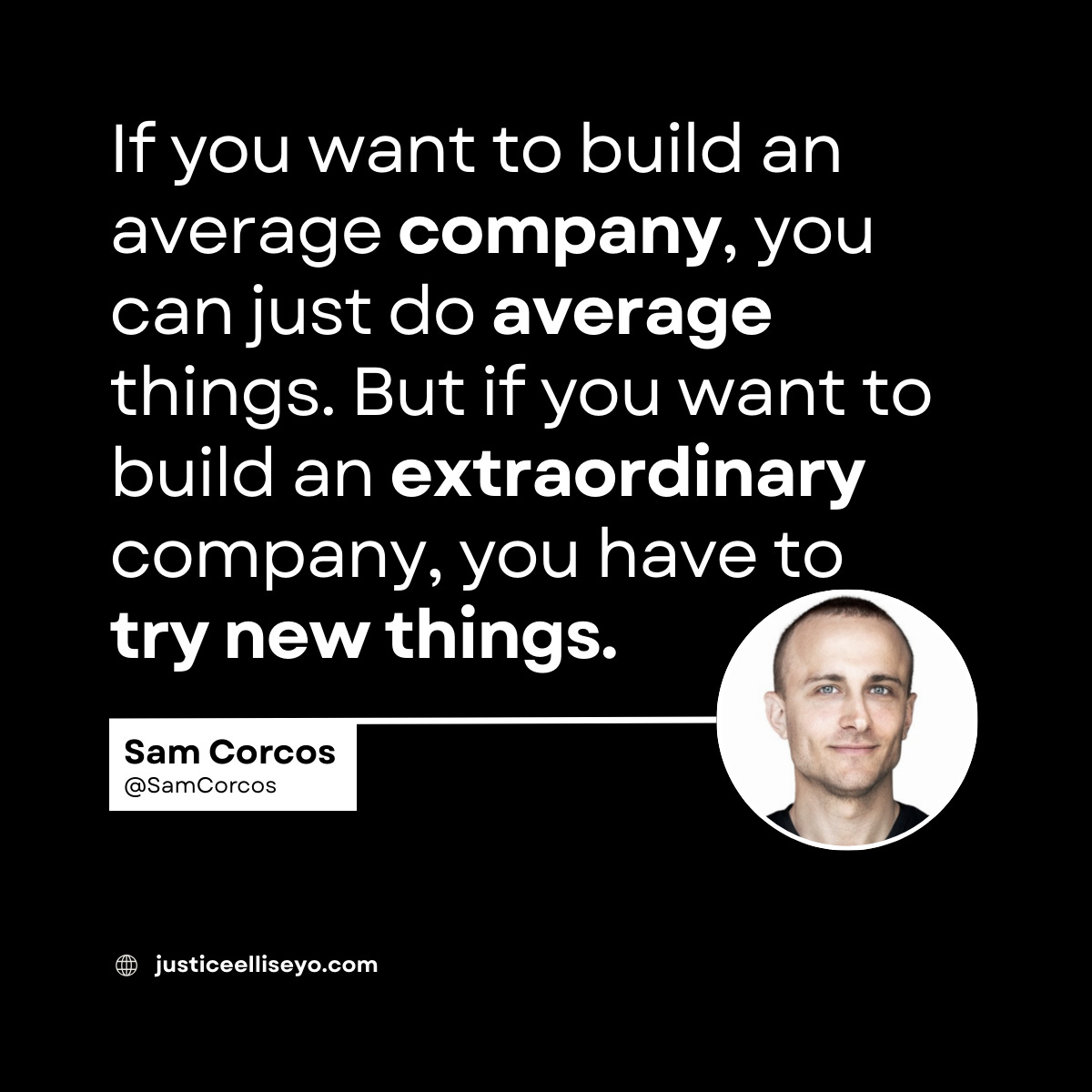
Average results come from average beliefs about what’s possible. If you want your work to matter, you have to believe that the rules everyone else follows aren’t laws of nature. They’re all negotiable.
So, extraordinary outcomes require us to negotiate beliefs about what’s acceptable, what’s possible, and what we’re capable of attempting.
7. Where does true influence come from?
Take it from the greatest quarterback of all time. He proved his beliefs about excellence through two decades of relentless consistency and seven Super Bowl rings.
Tom Brady lived this truth: “The life you lead is the life you teach.”
Our beliefs are constantly on trial, and our daily choices are easily the evidence that counts. We can claim to have discipline while hitting snooze, claim we believe in integrity while cutting corners, in excellence while doing just enough.
Today’s influencer culture has many people taking pictures in gyms without breaking a sweat. If that’s who you are, you have no business with integrity.
8. How do I position myself for the future I want?
Ken Coleman shares an obvious secret: “To do what you want to do, you’ve got to be around people that are doing it and in places where it is happening.”
Academics have argued for decades about whether nature is stronger than nurture. That’s because there are merits on both sides of the argument. The point Coleman is making here is that our environments are determinative
You can read every book, watch every video, attend every webinar, but if you’re surrounded by people who think small, you’ll think small. Your beliefs about what’s achievable are constantly being negotiated by the people you spend the most time with and the spaces you occupy.
If you want to believe bigger things are possible, go where those bigger things are already happening.
9. What builds genuine confidence?
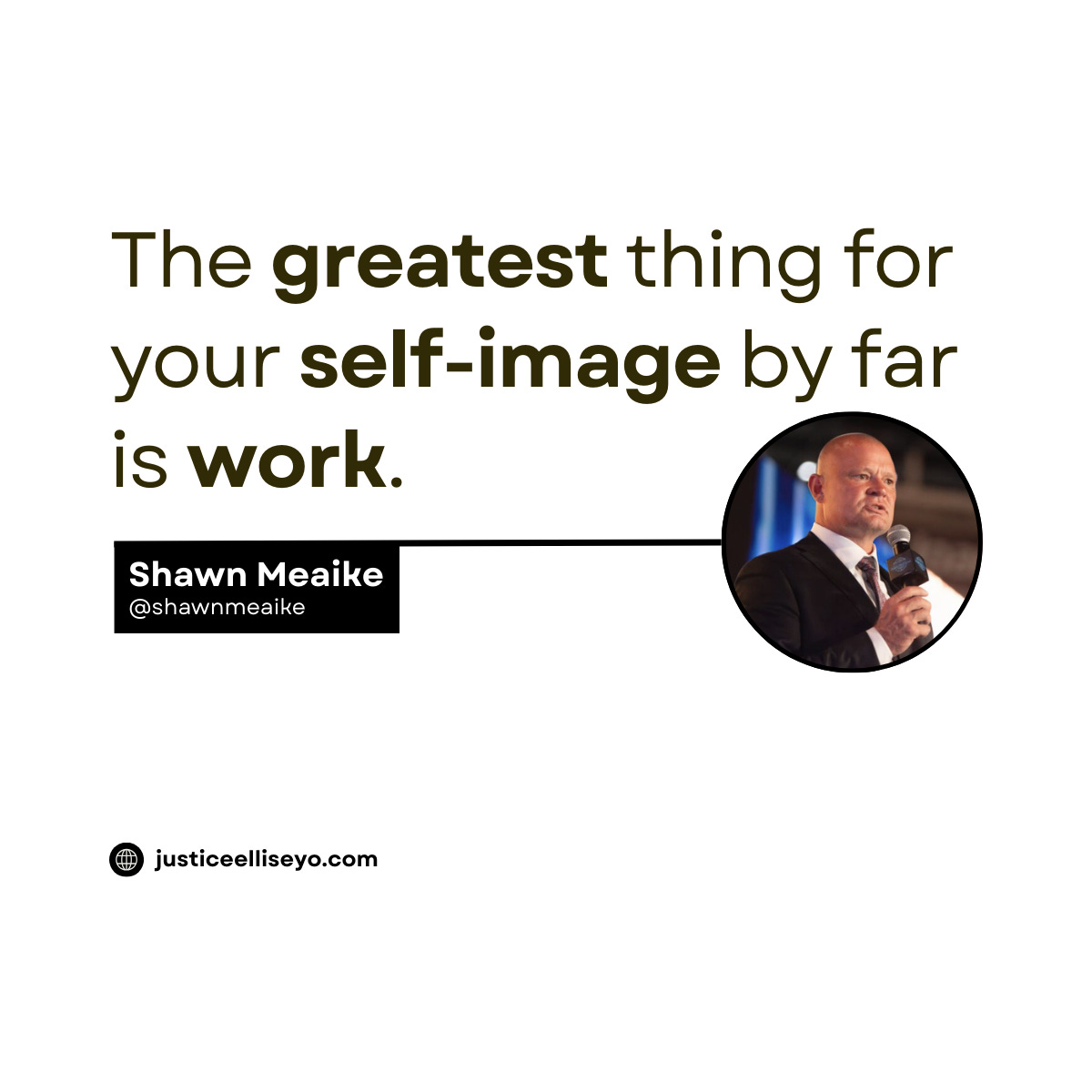
Shawn Meaike gets to the core: “The greatest thing for your self-image by far is work.”
Affirmations and visualisations are good, but working something out is just better because more than saying or imagining things, you have results to prove you’re capable. That’s what work gives you, proof and if done well, irrefutable proof.
This is a core aspect of my professional coaching service because our work reveals more about us than anything else. Of course, we aren’t the work we do, but you can’t identify as anything if you do nothing.
And yes, it sounds like a transactional view of humanity, but the human experience is itself filled with all forms of exchanges.
10. Are we truly equal if we have different outcomes?
“We’re all equal as souls, but we’re not equal in the marketplace.” - Jim Rohn
One problem with considering work as a means of identity formation is reconciling worth with results. This quote is a favourite of mine on this matter. Simply put, our intrinsic value has little, if anything, to do with our market value, because we all have equal worth or dignity.
But the economics of building wealth are subject to different considerations, the primary one being that the marketplace doesn’t pay for worth; it pays for value delivered. And in this, there’s no injustice except that which is perceived.
You can believe you deserve success, but if you don’t deliver value to the next person, you get nothing. On the other hand, you can believe that your worth as a human being is secure regardless of your socioeconomic outcomes, while still pursuing excellence.
Since the beginning, the marketplace has always rewarded us for our contributions, not for who we are, but we can all be contributors.