

I bet you have a similar waking experience as mine. If you like your bedtime dark, you awake to a dark morning.
And before your eyes find anything, your hand knows exactly where to go. To your phone.
Within minutes, you’re either reading a bible passage or scrolling through messages that late-nighters left you or app notifications, and breaking news. Fifteen minutes in a queue is long, as most people will tell you, but it vanishes quickly when your phone has your attention.
By the time you get out of bed, you’ve lost arguably the most precious thing you have in a day: your ability to control your approach to it.
If we consider our relationship with technology throughout history, it’s been generally helpful. Some might say that checking our phones too often is bad, and they’d be right to tell that to children or to someone whose health is threatened by incremental access to mobile gadgets.
The context has to be appropriate for such a statement; otherwise, you risk applying the same logic to other tech inventions, such as electricity, whose constant supply would be obviously socially transformative in places like Nigeria.
In my opinion, the fundamental problem with our phones is that we check them first.
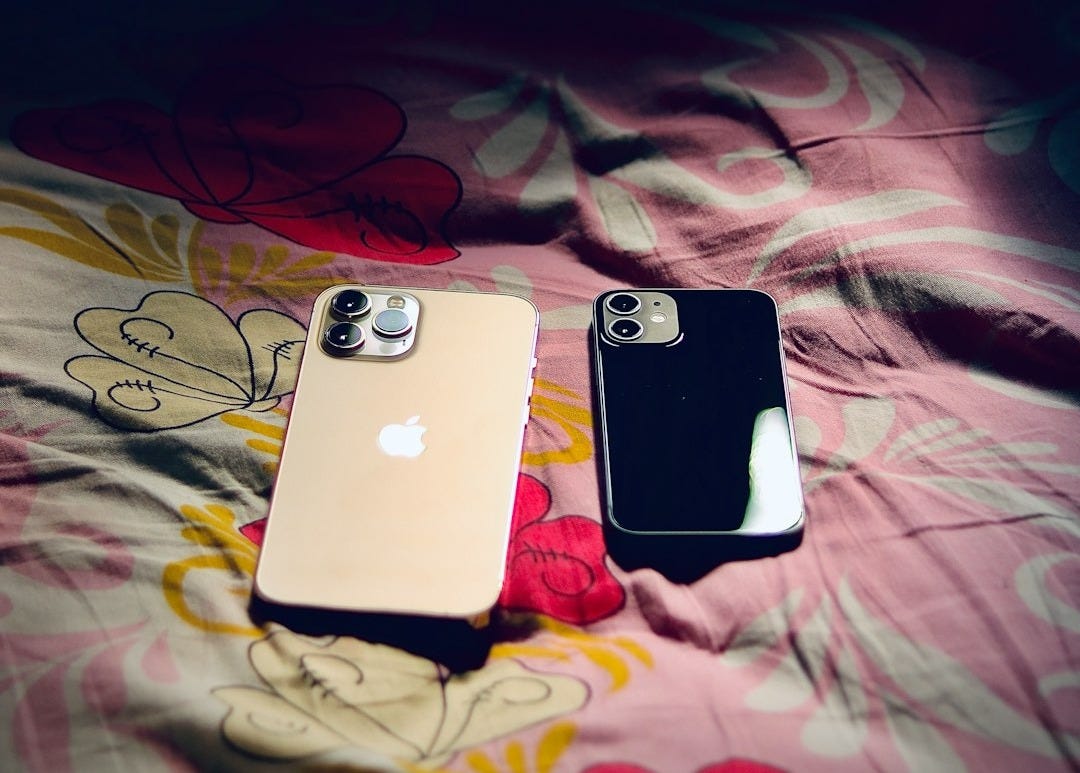
How a phone-first morning affects your faith
When you reach for your phone before you even fully wake up, before reaching for God, you’re making a choice that shapes the rest of the day.
You’re starting your day in “reaction to” rather than with “intention for”. You’re reacting to whatever notifications pop up rather than deciding what actually matters.
And for young Christians trying to build a genuine faith, giving up control to others and automated notifications that reduce the influence God ought to have over our affairs.
One study found that 78% of African teens identified as Christian, but only 14% of nominal (non-committed) Christian teens read their Bibles weekly, compared to much higher rates among committed believers.
The gap isn’t about whether we believe in God but whether we’re meeting with Him daily as we should.

Your willpower runs out fast
You don’t wake up with unlimited self-control.
Think of your willpower like a battery that starts at 100% when your eyes open and gradually drains throughout the day as you make decisions, resist temptations, and handle stress.
Roy Baumeister, a leading researcher on willpower, says that self-control functions like a muscle; it gets tired. The choices you make, the notifications you read or swipe away, and every difficult conversation you have burn your resolve.
So if you rush through your willpower in the first 30 minutes scrolling social media posts that strike various thoughts and desires in your mind, you’ll most likely be running on fumes when the real challenges of your day arrive.
Whenever I recall my experience with on-site jobs in Lagos, my appreciation for the productive people who work such jobs across African cities every day increases. They are very tenacious people. I mean, you dash out the door, dodge Lagos traffic for at least an hour, stand in packed danfo (buses), deal with street vendors and other pedestrians, avoid potholes, and manage aggressive drivers.
The problem is that by the time you arrive at the office, you’ve already exhausted significant determination and emotional energy. You’ve absorbed stress from countless interactions and decisions. So if your battery started full at 5 AM, by 9 AM, it’s drained halfway.
Working remotely gives me a tremendous advantage because I can protect those first crucial hours. On most occasions, I begin my day with the right amount of energy, at full bar.
So one would expect that because of this advantage, remote workers would be more conscious of their morning routine and develop a deeper relationship with God. But if I’m being honest, it hasn’t been a strong case for me or for many of the youths I interact with.
Though on-site workers are fighting an uphill battle to preserve some morning willpower, and remote workers have a faster start to the day, the temptations and troubles of life remain roughly equal.
Prayer and Bible reading require mental energy and focus. When you try to squeeze these in during your lunch break or before bed, you’re fighting against your own neurology. You’re trying to have a deep conversation with God when you’re exhausted. So we do the little we can and say, “God understands.”
I think the Bible isn’t accidental about anything.
It repeatedly points to mornings as a sacred time.
The Psalmist says: “In the morning, LORD, you hear my voice; in the morning I lay my requests before you and wait expectantly” (Psalm 5:3).
And Jesus? “Very early in the morning, while it was still dark, [He] got up, left the house and went off to a solitary place, where he prayed” (Mark 1:35).
The morning is when you have the clearest mind, the strongest will, and the fewest distractions.
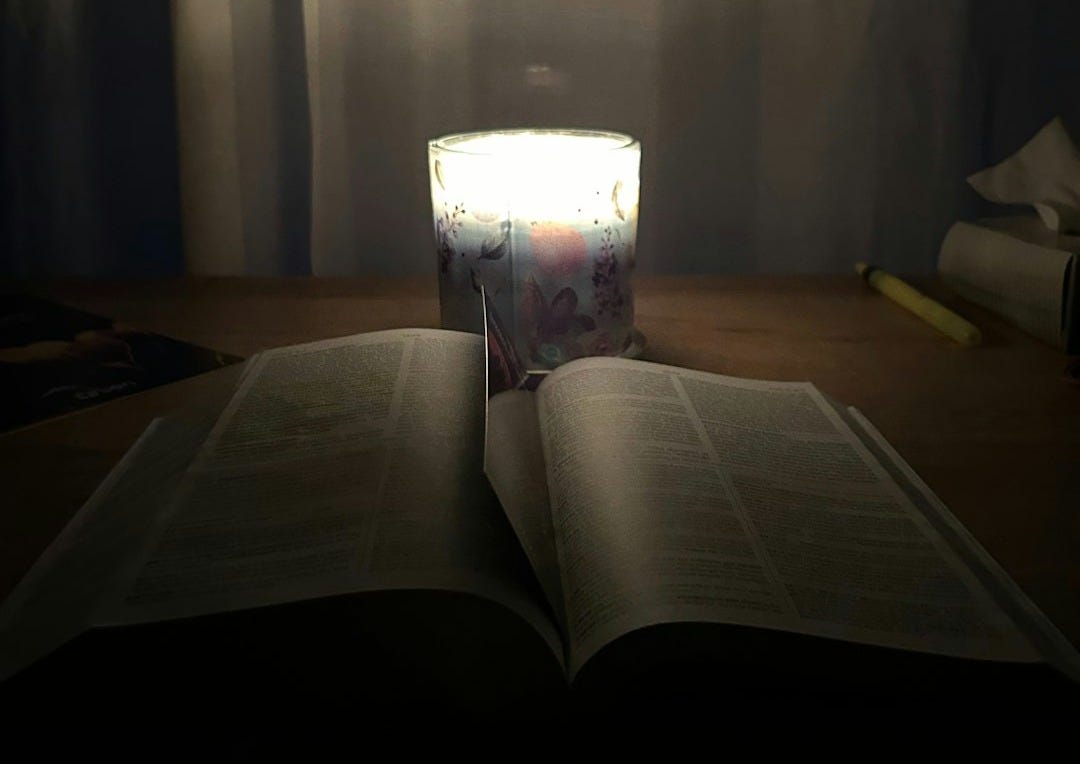
The mental model of the first thing
If you break your phone-first habit and replace it with something intentional like prayer, you’ll be nearly certain of regaining control of your morning.
If the first thing you do is check your phone, you’re programming yourself for reactivity. The mindset you have goes something like this: “Whatever comes at me today, I’ll respond to it.”
But if the first thing you do is pray, read Scripture, or sit in silence, you’re priming yourself for agency. You’re saying, “Today, I’m choosing what matters. I’m inviting God into my plans.”
When you’re done with Bible study, your brain goes, “What’s next?” And what’s next for a responsible young adult is work.
We know that spiritual maturity is becoming more like Jesus: more patient, more generous, more courageous, more at peace. And transformation results from a genuine relationship with God.
It requires your clearest mind and the willpower you haven’t exhausted, and the first thing you do in a day determines your approach to everything else.
Try prayer and Bible reading as the first thing you do when you wake tomorrow morning, even on your phone, and see how differently you approach the day.