

Hey there,
Quick one:
This week, I’ll send three extra articles, totaling four for the first time. They focus on annual goals and New Year’s resolutions. My point? You only need to set one goal that, once achieved, will make 2026 an excellent year for you. Thanks for reading. Stay tuned.
In 2000, Lewis Rambo, a psychologist specialised in conversion for many years, told PBS something that should have revolutionized how we think about conversion:
“Most conversions—not all, but most—take place through kinship and friendship networks. Through a connection with another human being, converts come to have a different view of the world, a different view of self, and a different view of God”.
Yet evangelical culture has promoted the idea of instantaneous conversion as a single “born-again” or “altar call” decision, emphasising the sudden aspect of Saul’s experience on the road to Damascus.
But in his seminal work, The Varieties of Religious Experience (1902), William James, often dubbed the Father of American Psychology, concluded that conversion can be sudden (self-surrender) or gradual (volitional), yet even the former typically follows a period of subconscious incubation.
And what shall we say of C.S. Lewis, the most dejected and reluctant convert in all England,” who recalled, kicking, struggling, and approaching theism with resentment in 1929 and then Christianity about two years later, aided by friends like Tolkien?
The crux of Rambo’s work and that of several others is that, for many Christians, conversion occurs over time.

Conversion is a process
Rambo’s model consists of seven stages: context, crisis, quest, encounter, interaction, commitment, and consequences. The stages aren’t necessarily fixed or linear, so you need not think of them as rungs on a ladder.
Perhaps the strongest objection to this gradual account of salvation is the notion that all it took for the former chief persecutor of first-century Christians, the Apostle Paul, was a singular encounter with Jesus.
Yet, if we apply Lewis Rambo’s seven-stage model of conversion to Paul’s experience per Acts 9:1-19, 22:1-21, 26:9-23, and Galatians 1:17, here’s what we would find:
Context: Saul was a devout Pharisee who persecuted Christians.
Crisis: The sudden appearance of a blinding light and the voice of Jesus saying, “Saul, Saul, why are you persecuting me?” challenged his mission to Damascus.
Quest: We may pass his response to Jesus, “What shall I do, Lord?” as the beginning of a search for direction. His quest may also be expanded to include his search for Ananias and his journeys to Jerusalem, Tarsus, and Antioch.
Encounter: He met the Risen Christ.
Interaction: Blinded for three days, during which he neither ate nor drank. God sent Ananias to meet him, lay hands on him, restore his sight, and provide initial guidance.
Commitment: Upon regaining his sight, he was baptized and began to preach in the synagogues that Jesus was the Son of God.
Consequences: He went from being the church’s chief persecutor to arguably, its most zealous apostle and missionary.
Therefore, even in Paul’s case, what began suddenly grew exponentially over time. This model may also be applied to the conversions of Lydia and the Philippian jailer in Acts 16, among others.
So what are these stages exactly?
1. Context
Rambo describes context as “the milieu in which a person’s spiritual journey begins,” encompassing both macro factors (e.g., the cultural and social environment) and micro factors (e.g., family and community).
“In the United States, we have a wonderful situation,” Rambo explains. “The tolerance in our society provides what I call ‘the ecology of conversion.’ This allows people to examine different options: What is best for me? What is true for me?”
On this note, one study reports that your spiritual worldview is formed mainly by age 13, and what you believe by then is what you’ll die believing unless you actively work to change it.
2. Crisis
“Often some kind of crisis triggers a new way of viewing things: a death in the family, failure in business or, paradoxically, even success in business”, Rambo found.
“I often have people tell me that [conversion came] at the point in their lives when they had achieved every goal they had, but were still not satisfied: ‘Is that all there is?’ So then they began a search.”
When we read the Pauline account of his conversion, looking solely at the moment when the risen Lord appeared to him, we risk idealizing it as a general formula for conversion.
“Even as early as 1924,” researchers noted that “the more typical model of conversion in the New Testament is that of Peter and Andrew on the shore of Galilee.” They were gradual, relational, and process-oriented.
3. Quest
“The quest then often leads someone to an encounter with a missionary or rabbi or teacher or just someone in the workplace. It is as if we have radar working in our lives to find someone who can help us.”
Rambo found that people search for multiple things: “One of the major things they are looking for is meaning in life—not just some vague sense that life has a purpose, but a very clear sense of who I am and what my life means in connection to other people.”
This typically includes:
Emotional gratification (relief of guilt, overcoming fear)
Community (meaning and belonging incorporated)
Power (connection to the Creator provides energy)
Transcendence (connection beyond finite existence)
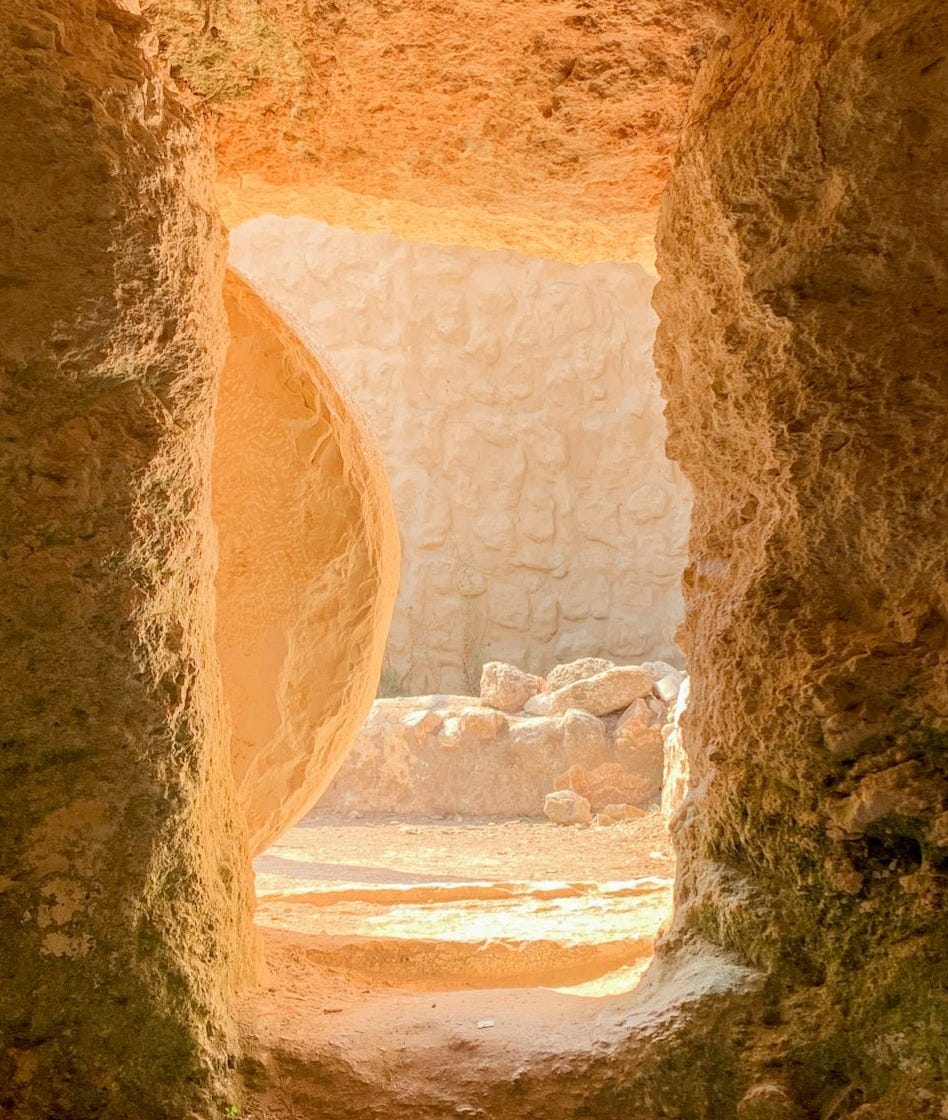
4. Encounter
According to Rambo, there is something about us human beings that makes us need to trust someone. Often, a message from a trusted friend has a greater impact because we desire someone we can rely on to lead or guide us into a new way of living.
But only 23% of Christian adults are currently being discipled by someone, and only 60% of church leaders are being discipled themselves.
“Conversion research shows that often people have experiences that are appropriate to the particular group that they may be converting to,” Rambo says.
So, Pentecostal Christians expect mystical experiences, while mainline Protestants expect rational, behavioral change over time.
5. Interaction
“The interaction phase is more focused on what it means to be a new spiritual being. In some cases, they need to learn how to pray. They need to learn how to study the Bible or scriptures,” says Rambo.
This is where most “conversions” stall. So far as I know, only the Catholic tradition requires its members to confess and opens its doors to people for confession.
Rambo explains that motivations change. For example, someone might initially fall in love simply because the other person is attractive and there’s an intense sexual attraction. However, if the relationship endures, it tends to deepen into trust and genuine love that’s not just physical or fleeting. Romantic passion then evolves into something much more enduring.
He continues: “I see that a lot in conversion. One of the parallels to conversion that many people have drawn is the experience of falling in love.”
The interaction stage is when initial attraction develops into a lasting relationship. However, without community, accountability, and regular practice, it cannot solidify.
6. Commitment
This stage represents the point at which a person consciously chooses to belong to, align with, and reorder their life around a new faith. Commitment is a durable act of allegiance, often reinforced by ritual, community, and expressed through lasting changes in identity, relationships, values, and behavior.
Commitment puts the believer in the position of agency, whereas, as Rambo says, “Traditionally, conversion meant a dramatic, sudden transformation. It was often received as a passive experience — ‘God came into me and made this happen,’ not a rational process — ‘I’m searching and changing behavior, changing attitudes.’”
In the words of William James, “the process, gradual or sudden, by which a self hitherto divided or consciously wrong, inferior and unhappy becomes unified and consciously right, superior and happy, by consequence of its firmer hold on religious realities.”
Making lasting commitments and sustaining them helps you build the firm hold that William James refers to.
7. Consequences
The consequences stage encompasses ongoing personal, social, and spiritual outcomes following a commitment to a new faith. It reflects how conversion reshapes identity, emotions, relationships, morals, and meaning. Consequences may include enhanced well-being, reduced fear or guilt, a sense of belonging, and new behaviors.
Still, they can also involve tension, loss, or conflict with prior communities. Importantly, this stage underscores that conversion is not complete at the moment of decision; it is validated and interpreted through the long-term effects it has on how a person lives and understands themselves in the world.
Rambo reported that many of the people he interacted with had never felt happier, having found a place to call home or a sense of belonging. Some said, “I am no longer afraid. I am not afraid of dying. I am not afraid of what people think of me. I am not afraid of guilt, because it can be transformed by God’s forgiveness.”

What about your faith?
I know someone who, despite being from a conservative Bible-believing church, was baptised twice under the same church tradition. He faulted his first baptism because he confessed to having indicated interest in baptism following his friends’ baptism.
Similarly, someone has written about being born again twice. What I think is common to both encounters, and those of others I have interacted with, is a yearning for a turning point. That one incident they could point to that turned things around in their life, that moment that transforms you.
And yes, while a single event has the potential to turn things around, it doesn’t often result in spiritual maturity as people grow because emotions don’t last and sudden conversions, though more emotionally intense, are potentially less stable.
As is widely known, C.S. Lewis’ conversion involved multiple stages, relationships, and intellectual wrestling, which contributed to the development of his faith.
If you’ve been “Christian” for years but feel nothing:
Find the elements in your conversion that are lacking.
Perhaps you’re in a crisis, but you have no quest. We ought to be looking forward to something (Philippians 3:20-21), but maybe you aren’t; you’re lacking a quest. Perhaps you have an intellectual commitment, but you’re paying no consequences, not letting go of sins, nor “paying it forward with good works worthy of emulation.”
Every journey of faith begets commitments and consequences.
Fan the embers of your faith every day, forever.
Just as lasting, faithful marriages do not have endless but rekindled love, lasting faith also needs kindling.