

When I started listening to Revisionist History sometime in 2019, I loved it so much that I would anxiously wait for the next episode each week.
Now thirteen seasons in and with several awards, one of my favourite episodes remains Hallelujah (episode 7, season 1).
The host, Malcolm Gladwell, uses Cézanne as a prime example of what economist David Galenson calls “experimental innovation,” the opposite of conceptual genius (represented by Picasso).
Cézanne would spend months on a single painting. He’d arrive at his studio before dawn, prepare his canvas, and study the same mountain, the Mont Sainte-Victoire, which he’d painted dozens of times before. He’d apply a few strokes, step back, observe the hill again, and sometimes scrape away what he’d just painted. He was that intent on bringing most of his inner paintings to material life.
He did version after version, “iteration after iteration, trying to stumble on something that seized his imagination,” says Gladwell. For example, the fourth portrait of his wife, Gladwell says, is actually less finished than his second and third versions because he’s not marching toward completion in the conventional sense.
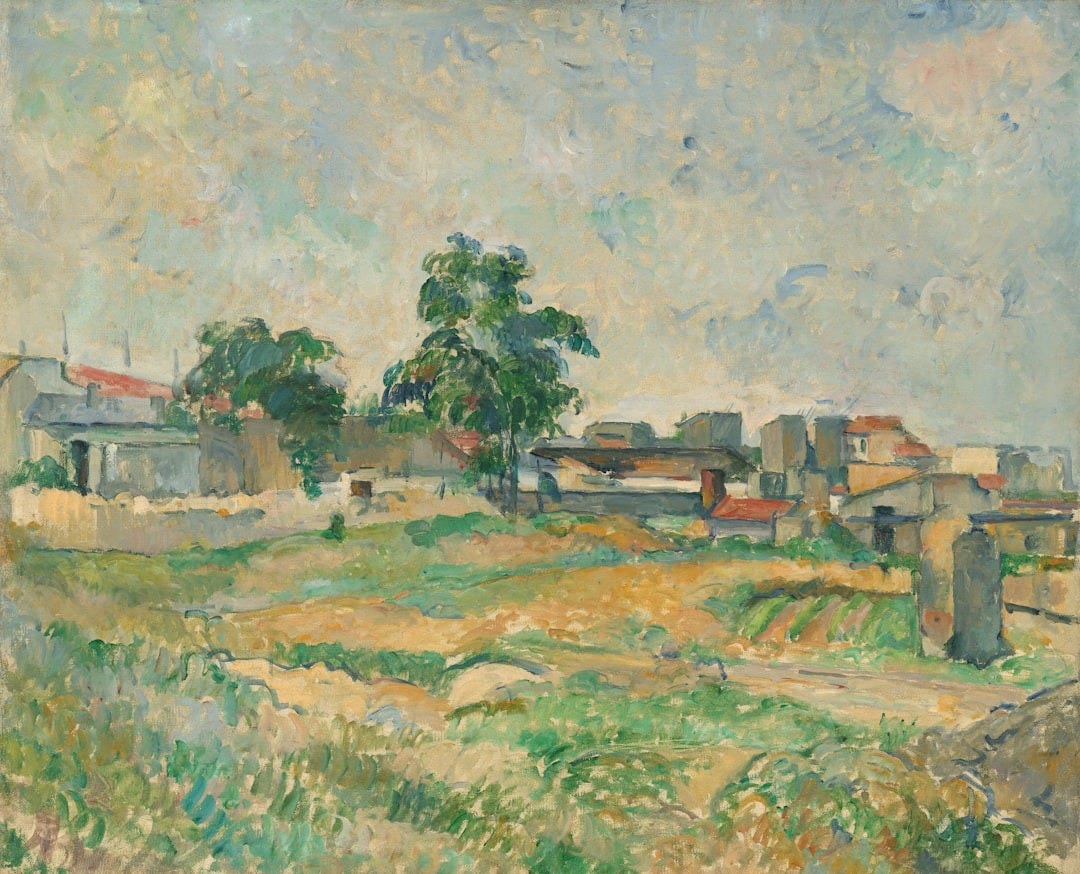
By the time he died in 1906, he had abandoned more works than he finished because he never stopped trying to grasp what his mind saw and told him was possible.
The other genius featured in the episode is Leonard Cohen. He wrote more than eighty verses for “Hallelujah” and performed various versions in concerts, testing them against his mental image of what the song could be.
Perhaps that unwavering creative spirit is the very magic of Hallelujah, because how else would you explain that it took another iteration ten years later by another artist, Jeff Buckley, who himself iterated a version of the version by John Dale to become a cultural anthem?
I’m narrating these stories because they’re interesting enough to compel me to theorize a lesson or two on their applications for talent development. But I’ll admit that there’s some obsession in both of them. I mean, Cézanne once made 100 sittings with his art dealer (instead of five) and didn’t sign many of his paintings because he didn’t want to admit he’d finished them.
Many of us cannot afford the luxury of countless iterations like Cézanne.
We have deadlines. Bosses, clients, projects, and other demands are cataloged with imminent delivery dates in our heads. We usually complete the work as soon as possible.
For some people, that’s okay, but for a good number of others, that’s not what we want from our work. We want our outputs to bring us pride in the present and the future.
If you often feel a nagging sense that something you did could have been better, that if you’d had one more day, one more revision, you would have done it differently. Or, more like, the work you submitted isn’t quite what you wanted to submit. It only means one thing: you did not realize your creative ambitions, even if the job met the brief.
Why?

How the mind iterates
First, let’s talk about how the mind makes us productive.
The mind typically engages in a back-and-forth with the hand or whatever instruments serve its creative desires. It generally forms an initial image of a thing, which it updates as the object is created.
I think that when Cézanne finally walked away from a painting, it was likely because his mind had stopped arguing with his canvas. The image in his head that had been evolving with each brushstroke had settled.
Let me explain.
There’s something called a “taste gap,” the distance between what you can recognize as excellent work and what you can actually produce. “Nobody tells this to people who are beginners,” Ira Glass says. “All of us who do creative work, we get into it because we have good taste. But there is this gap. For the first couple [of] years you make stuff, it’s just not that good... Your taste is why your work disappoints you.”
The taste gap theory helps explain part of your dissatisfaction: you can envision better work than you can execute. Our internal standards exceed our current capabilities, particularly when we’re relatively inexperienced in our fields.
But that’s not all.
With every creative project, a presentation, an essay, a design, or a strategy, your brain begins forming a prediction, an evolving image of what the output could be. Neuroscientists call this “predictive processing.”
Your brain is constantly generating predictions about what should happen next, then comparing those predictions to what you’re actually building. When there’s a mismatch, your brain either updates the prediction or tries to change reality.

It’s really just iteration!
You have an initial idea of what you want to make. You start making it. As you work, your brain gets feedback, which refines your mental image of what the work should be. The duty of your hand or feet, as the case may be, is to catch up with your mind’s eye.
Cézanne was fond of doing this. In fact, he enjoyed it! Each brushstroke told his brain what to do next, though he sometimes destroyed what he didn’t like in his work. The entire process gave his mind clearer information about what his painting should be in reality. And he kept painting until his prediction stopped and the image in his head aligned with the one on the canvas.
The same with Cohen and “Hallelujah.” Each performance, each revision, each new verse gave him feedback until the gap between what he heard in his head and the song he wrote and played (prediction error) was small enough that he could stop.
We can think of this kind of satisfaction as resonance, the moment when what we hear, read, see, or feel matches what’s in our mind.
Taste gaps and prediction errors result in cognitive tension
Some deadlines will be too tight for you to make multiple drafts or revisions, but when you have to submit something before your prediction has stabilized, your brain doesn’t stop forming that image.
The mind will keep refining what it thinks the work should be, even after you’ve delivered the job. This is why you feel dissatisfied.
Your execution didn’t match your mind’s ambition for the job (the taste gap) because your internal standard was still forming, but you stopped before it could finish.
Some psychologists have identified stages that may help us better understand the mind-reality gap. They are:
preparation
incubation
illumination, and
verification.
If you compress or skip incubation, the period during which your mind processes several possibilities for your work, even if you hit illumination (your “aha” moment), chances are that your mind won’t have adequate verification (testing, refining, and aligning your execution with your vision).
By the time you’ve submitted that rushed work and are free from anxiety, you’ll likely have a prediction error, a mismatch between what your brain predicted the work would be and what you actually produced. Add prediction errors to your taste gap, and you’ll be dealing with cognitive tension.
Why?
Because your brain doesn’t like unresolved gaps, it will bother you with all sorts of: This isn’t quite right. You could have done it differently. There’s a better version you didn’t have time to find.
Another psychological explanation for this is the Zeigarnik Effect, which states that unfinished tasks occupy more mental space than completed ones. Your brain registers every rushed work, even though it’s technically “done,” as incomplete because it hadn’t closed the prediction loop when you submitted your work. In other words, you finished the task, but not the mind’s creative process.
I like this explanation because it is funny and accurate. It explains why the brain remembers the struggles we face and not all the small victories we experience every day. In difficult situations, our minds continually predict and process information to understand the problem and how to solve it, drawing on all available resources.
Despite that, when it comes to mental things, there’s hardly ever one or two sufficient explanations, so while I was ruminating on this article, I asked myself, what else might be involved?

You see, there’s a choice dimension here, too, that explains why we could be dissatisfied with a job we completed.
According to Barry Schwartz, people who constantly imagine alternative possibilities experience greater regret. When you rush through a task for which you didn’t explore alternatives, your brain is unhappy because it thinks that the other options you could have tried but didn’t would have been better.
Please don’t mistake what I’m describing in this article as perfectionism.
Perfectionism is the fear of judgment or the need for everything to be flawless. This is instead about creative ambition, our innate desire to realize our best work when we give our minds the time and resources it requires.
Again, why isn’t this perfectionism?
It isn’t because the problem I’ve discussed here isn’t merely a matter of high standards, but failure to allow our minds enough time to settle on what the standards should be, and our hands, feet, or whatever else we use enough time to meet them.
Whenever possible, never rush your work
People like Cézanne and Cohen iterate so much that it becomes second nature.
They don’t rush the prediction loop but allow their vision to evolve. They iterate not out of indecision but out of respect for the process their brain is running, and they know that the first version of an idea is rarely the clearest, that mental image needs time to refine, and that execution requires revision to catch up.
Though many of us make presentations, write reports, design, pitch, and develop strategies, the same process applies. Your brain predicts an output that evolves as you work. If you iterate, your execution will eventually align with your vision. And your satisfaction increases only as the prediction error shrinks.
If you have an ambitious mind, your prediction won’t stop evolving because a deadline is looming over you.